Introduction
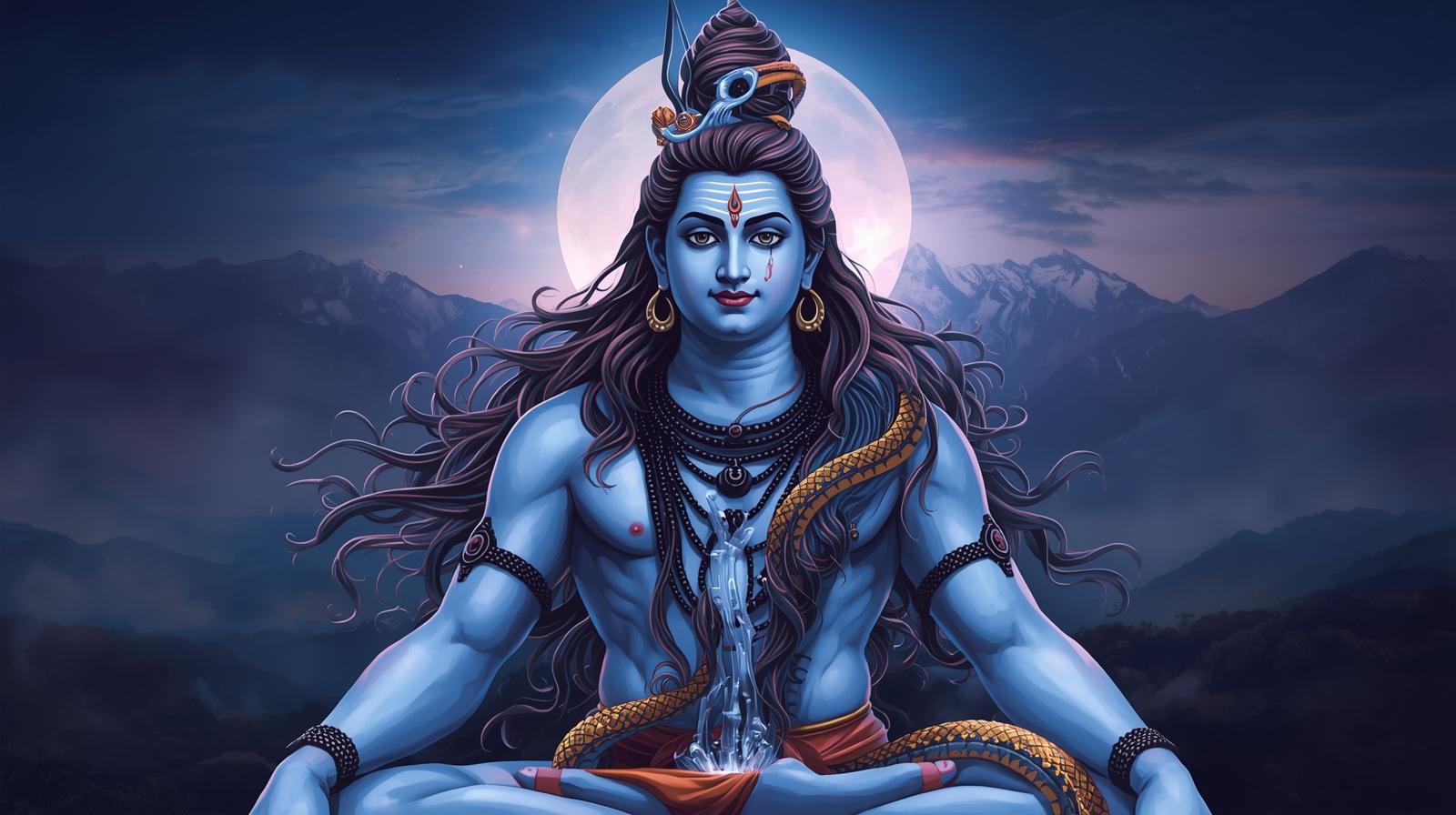
Lord Shiva, one of the principal deities in Hinduism, represents the essence of creation, preservation, and destruction. Revered as the “Mahadeva” or “Great God,” Shiva embodies both asceticism and divine energy, symbolizing the balance between life and death, meditation and action, and destruction and renewal.
Origins and Symbolism
Shiva’s origins trace back to the ancient Vedic period, where he evolved from the Rudra deity mentioned in the Rigveda. Over time, he became a central figure in Shaivism, one of the major traditions within Hinduism. His iconography is rich with symbolism:
- Trident (Trishula): Represents the three fundamental aspects of existence—creation, preservation, and destruction.
- Third Eye: Symbolizes higher consciousness and the power to see beyond illusion.
- Crescent Moon: Denotes the cyclical nature of time and rejuvenation.
- River Ganga: Flowing from his matted hair, it signifies purity and the life-giving force of nature.
- Serpent Around the Neck: Represents control over fear and death.
- Blue Throat (Neelkanth): A reminder of his act of consuming poison during the churning of the ocean (Samudra Manthan) to save the universe.
The Cosmic Role of Shiva
Shiva’s role in the cosmic cycle is that of the destroyer, but his destruction is not negative—it is a necessary step for regeneration. He dissolves the old to make way for the new, ensuring the continuity of existence. This transformative power makes him a symbol of change and spiritual evolution.
Forms and Manifestations
Shiva is worshipped in numerous forms, each representing different aspects of his divine nature:
- Nataraja: The cosmic dancer who performs the Tandava, symbolizing the rhythm of creation and destruction.
- Ardhanarishvara: A composite form of Shiva and Parvati, representing the unity of masculine and feminine energies.
- Lingam: The abstract representation of Shiva, signifying the infinite and formless nature of the divine.
Family and Consort
Shiva’s consort, Goddess Parvati, embodies love, fertility, and devotion. Together, they represent the perfect balance of power and compassion. Their sons, Ganesha and Kartikeya, are also widely revered—Ganesha as the remover of obstacles and Kartikeya as the god of war and victory.
Worship and Festivals
Devotees honor Shiva through meditation, chanting of mantras like “Om Namah Shivaya,” and rituals performed in temples and homes. The most significant festival dedicated to him is Maha Shivaratri, celebrated with fasting, night-long vigils, and offerings of milk, honey, and bilva leaves to the Shiva Lingam.
Philosophical Significance
In Hindu philosophy, Shiva represents the ultimate reality—Brahman—beyond form and attributes. He is both the ascetic yogi and the compassionate householder, embodying the duality of existence. His teachings inspire detachment, self-realization, and the pursuit of inner peace.
Conclusion
Lord Shiva stands as a timeless symbol of transformation, balance, and transcendence. His presence in art, literature, and spiritual practice continues to inspire millions across the world. Through his divine paradoxes—destroyer and creator, ascetic and householder—Shiva teaches the eternal truth that destruction is not an end, but a beginning of renewal and enlightenment